
Massage
Massage involves the application of special hand movements by the therapist, or of a device, with the aim of treating the injured and/or ill. Massage can therefore be defined as the application of soft-tissue manipulation for therapeutic purposes. Although various massage devices exist today, manual massage is certainly the most effective method, because in addition to its therapeutic component it also has a diagnostic one.
The physical contact between patient and therapist also brings benefits in treatment. Massage is the oldest form of treatment and is performed manually (by hand) or with the help of a device. Through the skin it acts on the muscular, lymphatic and nervous systems. Massage is a very popular therapeutic method, used in the treatment of various conditions, but also for relaxation and prevention. According to its purpose, we can divide it into the following three groups:
• therapeutic-medical
• sports
• aesthetic
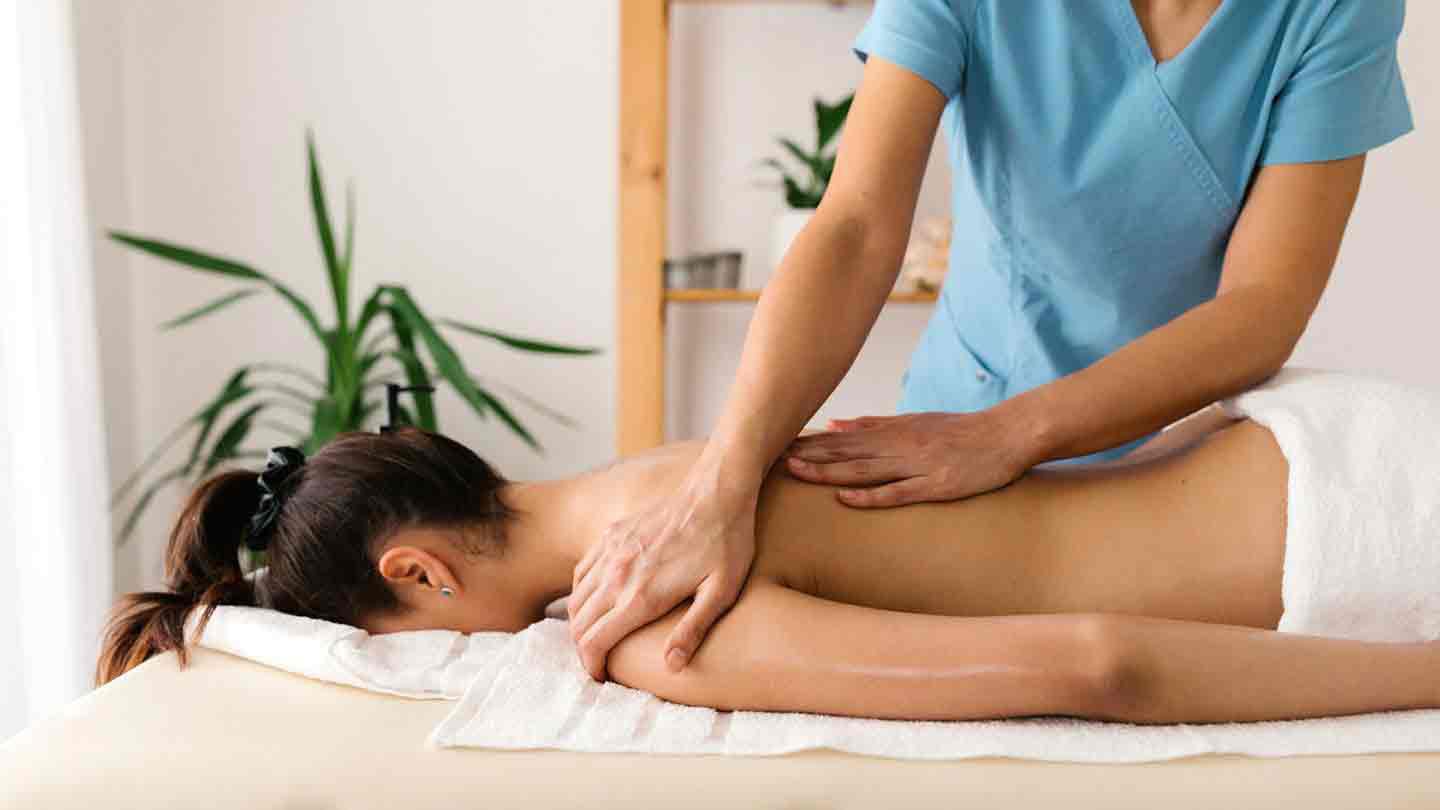
Therapeutic-medical massage
Therapeutic-medical massage is used in the treatment of rheumatic conditions, especially in extra-articular rheumatism such as myofibrositis, tendinitis, bursitis, etc. It is also used to treat neurological conditions such as neuralgia, damage to the central and peripheral nervous systems, etc.
Sports massage
Sports massage is intended to improve an athlete’s form, boost metabolism and increase endurance during performance. It is applied immediately before and after a match or training and is divided into a preparation phase and a relaxation phase.
Aesthetic massage
Aesthetic massage is used to improve the state of health, for body care and general relaxation. It is recommended to go 2-3 times a week, according to the patient’s needs and wishes. This massage can be applied as a standalone procedure or as part of a program for weight loss and cellulite removal.
The biological effect of massage is based partly on the mechanical stimulation of receptors (nerve endings) in the skin and subcutaneous tissue, and partly on the direct mechanical action on the tissues (pressure force, friction force, stretching, etc.).
Stimulation of the receptors triggers a series of reflex reactions of the tissues and organs, which can be:
– local (occurring directly around the treated area)
– general (occurring in distant regions of the body)
Through direct mechanical action, massage stimulates circulation and acts on the tone of muscle and connective tissue (relaxation or toning of the muscles depending on the technique used, and softening of the connective tissue).
Effect on the skin and subcutaneous tissue: massage cleanses the surface layer of the skin of desquamated cells, oil, sebaceous gland secretions, sweat, dust and the like. It stimulates the function of the sweat glands and the elimination of sweat. Massage softens the subcutaneous connective tissue, so that some forms of its hypertrophy can be completely removed, while fibrous tissue and areas where tissue layers are stuck together (adherent) can be partially or completely resorbed.
Book your first appointment for free!
When it comes to assessing the length of recovery, our team will determine and give the necessary guidelines for the fastest and best recovery. Not sure yet? You are just one click away from a free consultation.
Call now to book 060/134-3303