
Kinesitherapy: Healing Through Exercise
Kinesitherapy is an essential method that combines a set of exercises and various techniques aimed at returning the patient to their pre-injury condition.
This movement therapy is applied in subacute and chronic conditions following orthopedic procedures and injuries that occur in everyday life.
Through the synchronized performance of movements with proper activation of specific muscles, a correct movement pattern is achieved, with or without load, which is of great importance for rehabilitation and full recovery.
Kinesitherapy plays a key role in returning the patient to optimal function and improving quality of life.
In our center, kinesitherapy exercises are always carefully planned and dosed for each patient, taking into account their specific pathology and current physical condition.
Every patient undergoes an individual assessment and analysis in order to determine the most effective exercises and rehabilitation approach.
In this way we ensure that the exercises are adapted to the patient’s needs and abilities, so that optimal recovery is achieved.
Our team of experts monitors the progress of each patient throughout the therapy and adjusts the exercise plan to achieve maximum benefit.
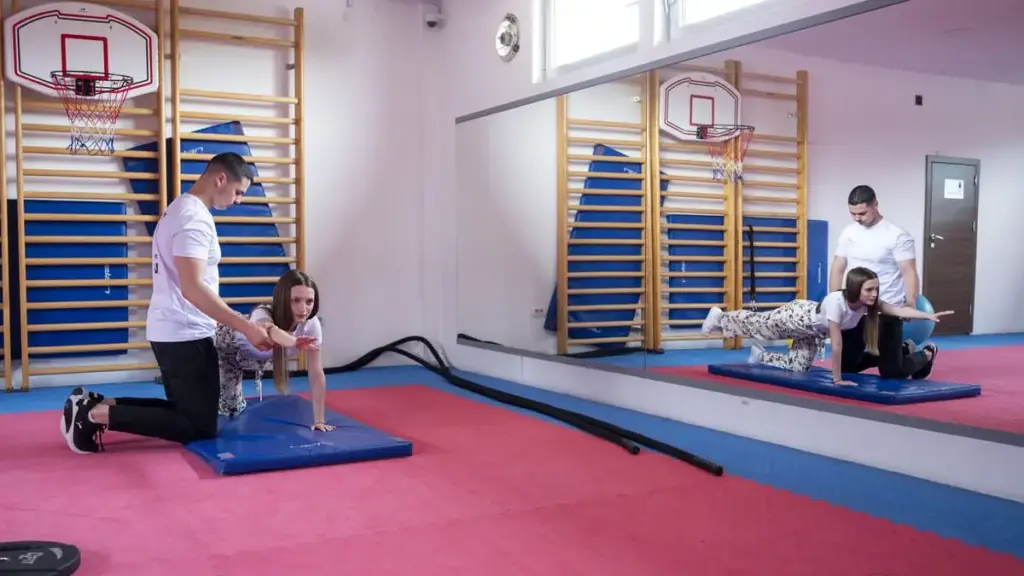
What are the categories of kinesitherapy?
Kinesitherapy is organized into several categories in order to achieve a comprehensive recovery of the patient. These categories include:
1. Postural exercises: applied to people with poor posture, where through analysis in three planes (frontal, sagittal, horizontal) and observation during movement we identify imbalances in parts of the body.
Kinesitherapy is very often applied for diagnoses of cervical syndrome and lumbar syndrome through posture correction by training the patient while they are still in physical therapy.
Depending on the degree of deviation from body symmetry, a plan and system of exercises is created, determined by a physiatrist or physiotherapist through a functional assessment.
-scoliosis
-kyphosis
-pronounced lordosis of the spine
-asymmetric position of the shoulders and shoulder blades
-flat feet
-asymmetric position of the hips and knees (X and O legs)
2. Mobility exercises (range of motion): applied when full range of motion of the limbs, trunk or neck cannot be performed during everyday activities.
The causes can be various, but most often they are the result of injuries, fractures, post-operative conditions or prolonged immobilization such as a cast or bandage.
This often leads to an impaired
joint position and limited mobility. Through mobility exercises, the goal is to restore full function and later the strength of that segment.
3. Proprioception exercises: performed in patients whose segment stability and motor control are impaired, leading to a disrupted correct movement pattern.
They are often applied in patients with neurological damage, as well as in patients after long immobilization and immobility of body parts.
The goal of proprioception exercises is to improve proprioceptive awareness, balance and coordination of movement, in order to restore normal function and prevent re-injury.
These exercises usually include activities that stimulate the proprioceptive receptors in the joints and muscles, such as balance exercises, changes of position and support, as well as exercises on unstable surfaces.
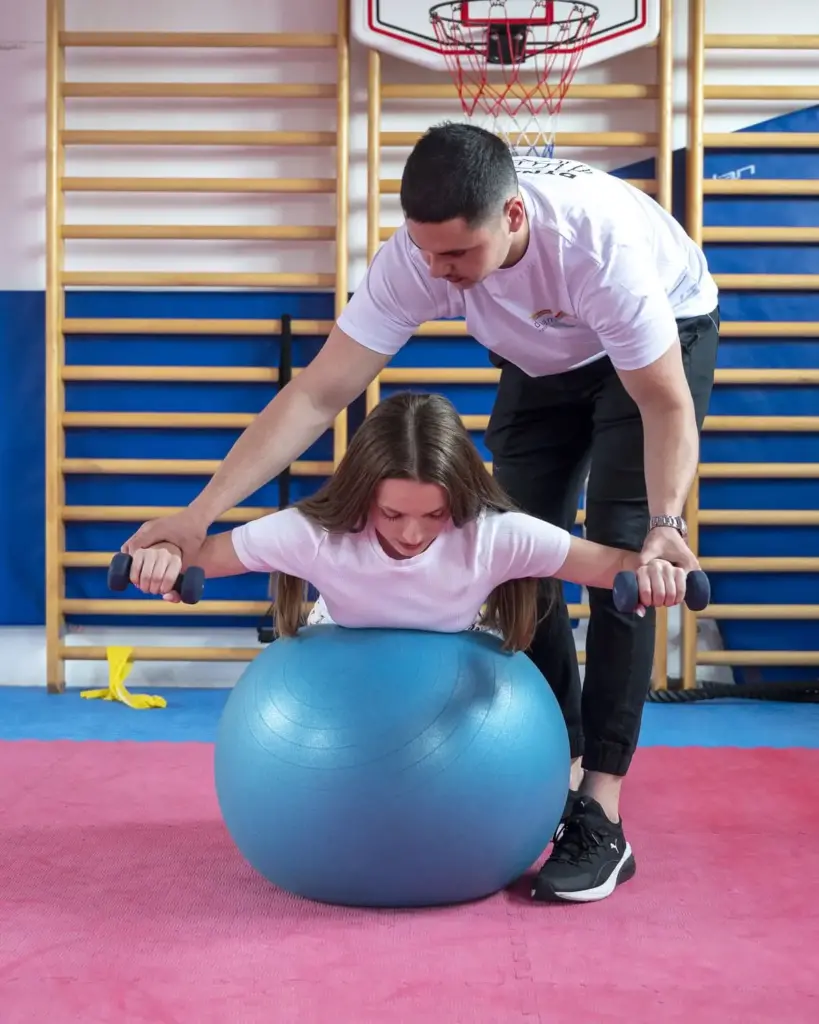
4. Strength exercises: applied as a form of additional load in order to increase muscle strength and the functional ability of the body.
However, before strength exercises are started, it is important that postural control, mobility and proprioception are at a satisfactory level.
This means that the patient should have stability in the body segments, sufficient joint mobility and proper movement control in order to perform strength exercises correctly.
These exercises usually involve the use of loads such as weights, elastic bands or the patient’s own body weight. It is important that strength exercises are performed correctly and under the supervision of a qualified physiotherapist in order to achieve the optimal effect and prevent injuries.
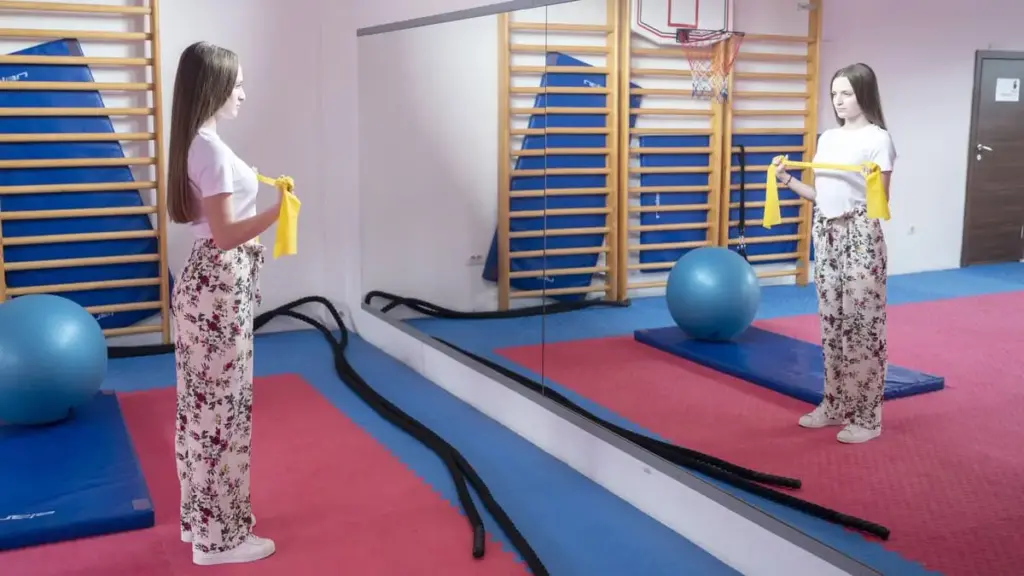
Kinesitherapy depending on the patient's condition
Performing exercises depending on the patient’s condition after an injury can be:
Passive exercises: These exercises are applied when the patient is unable to perform the movement on their own due to impaired motor control and neurodynamics in the central or peripheral nervous system.
The therapist performs the movement instead of the patient in order to re-establish the correct movement pattern.
This technique is applied in patients with neurological damage such as stroke, brachial plexus injury, cerebral palsy, peroneal nerve palsy and other problems that affect voluntary movement control after surgery and prolonged immobilization.
Passive-assisted exercises: This exercise method is applied when the patient does not have enough strength to perform the full range of motion. The therapist helps the patient perform a movement that is difficult and that they cannot perform alone. This technique is used to achieve the inner, middle and end range of motion.
Active exercises: This exercise method means that the patient performs the exercises independently in order to increase muscle strength. Correction by the therapist is important to ensure that the patient performs the movement correctly and activates the appropriate muscles.
If the movement is correct and the activation of the surrounding synergistic muscles is proper, a load can be added in the form of manual resistance.
What are the goals of kinesitherapy?
● Restoring motor activity
● Improving the function of the locomotor system
● Learning protective positions
● Gait training for bedridden patients
● Improving the cardiovascular and respiratory system
● Improving coordination
● Normal breathing
● Training in preventive exercises
● Increasing muscle strength and elasticity
● Reducing joint stiffness and gaining flexibility
Treatment
Kinesitherapy in water is one of the most widely used therapies in the world, recommended for people’s recovery, especially in acute conditions when segments are painful and swollen.
Performing exercises in water makes movement easier and allows kinesitherapy to start earlier. Water exercises usually include relieving load on the segments and improving mobility and neurodynamics, as well as increasing strength.
For sports injuries, rehabilitation begins immediately with physical therapy and pool therapy in order to achieve the fastest possible recovery and return to the field.
Among the physical procedures, TECAR therapy combined with water has proven to be the most effective in speeding up the recovery and rehabilitation period, up to twice as fast compared to classic physical therapy with currents.
Manual therapy in the form of mobilization and soft tissue massage also reduces pain and speeds up recovery from sports injuries.
Kinesitherapy aims to achieve maximum physical activity before returning to the field. An important factor for the speed of recovery is the level of physical activity before the injury and the patient’s physical fitness.
Book your first appointment for free!
When it comes to assessing the length of recovery, our team will determine and give the necessary guidelines for the fastest and best recovery. Not sure yet? You are just one click away from a free consultation.
Call now to book 060/134-3303